
Relevance Beats Personalization
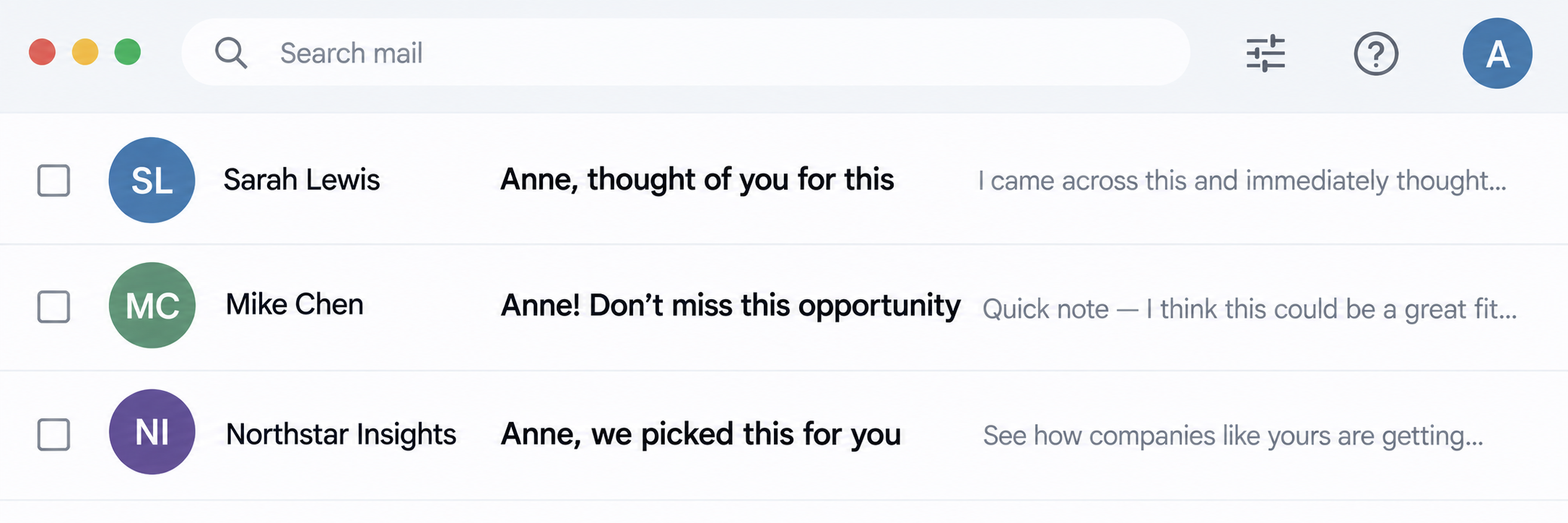
Last week, I received an email from someone pitching a guest for my podcast Grow Good. The email mentioned my podcast’s name, a recent guest’s name and quote from their episode, and a thematic connection explaining why the recommended guest was a fit.
On the surface, it was impressive – something that would have taken 30 to 60 minutes to write three years ago. However, while I can’t be sure, I suspect that no human wrote this email. Upon closer reading, the proposed guest had nothing to do with my podcast’s theme, but it was packaged with all the signals of a highly custom, tailored pitch.
We have become obsessed with AI’s ability to learn from itself and improve, but amid this AI awe, we've forgotten that the human brain adapts too. When marketing tactics exploit mental shortcuts that tell us someone invested time in us, customers wise up quickly. The more ubiquitous they become, the more skeptical our audience grows.
Personalization Arbitrage
As technology and, in particular, AI tools advance, they promise unbelievable levels of personalization. Marketers are increasingly searching for what I call Personalization Arbitrage, which exploits the gap between the perceived value of personalization—because it implies human effort—and the lower cost of delivering that personalization at scale, thanks to advances in technology.
Here are a few examples:
Cursive Computer Font: Originally, this was a novel way to imply that a human wrote the letter. Now, everyone knows it’s simply a font and is perceived no differently, and perhaps even more skeptically, than any other direct mail.
Personalized email subject line: When we first received emails addressed with our name in the subject line, we paid extra attention, assuming someone wrote the email just for us.
Personalized Quiz Result: Brands in the wellness space often promise customized diagnoses or insights based on answering a set of diagnostic questions. After investing time answering, the customer often gets no personalized diagnosis but a generic subscription or product package, leaving the customer feeling misled.
At first, these tactics work. In 2018, data showed that personalized subject lines increased open rates by 20% and sales by 31%, but when the research was repeated five years later, there was no such benefit. Marketers often use these approaches because impressive statistics suggest better attention and conversion. But over time, their effectiveness fades because people see them as attempts to influence and mislead at minimal cost to the company, rather than as real value.
Effective marketing is built on trust. Customers buy from us when they believe we will deliver on the brand’s promises. That impression starts with the very first interaction with a company. Personalization and human attention help communicate that we understand and care about our customers, but when we imply effort where none exists and offer personalization that adds no value, we create distrust.
These marketing tactics work temporarily because they are exploiting two cognitive heuristics:
The Effort Heuristic
Individuals value things more when they think they take more time. It’s a mental shortcut that attributes quality, value, and likability based on the time invested to create it. It’s why we think something hand-carved is higher quality than machine-produced, or a report that took 100 hours to research is more valuable than one completed in two.
If we believe someone puts more time into an email or pitch, we value it more than if we think AI created it. Similarly, if a brand creates a truly customized diagnosis and solution in response to customer quizzes, we value the time and rigor behind that level of detail.
Reciprocity
When people receive something, they feel obligated to reciprocate. Therefore, if we believe someone has invested time in us through personalized research, a handwritten note, or a thoughtful gift, we feel obligated to respond. However, when we realize that time investment never really existed, the sense of obligation disappears.
Why Personalization Arbitrage Stops Working
Tactics that falsify human effort stop working because of a principle called Persuasion Knowledge. This idea suggests that consumers’t simply passive receivers of information; they get smarter about how they are being influenced. When they understand marketers' goals and methods, it changes how they perceive and respond to the message. As they become more aware of technology advances to personalize at scale, they discount, ignore, or even retaliate against those tactics.
When I receive a podcast pitch that clearly looks human-written, and I know they took the time to research and listen to my podcast, I reply with a more thorough response. When I know it’s an algorithm, I press “delete.”
The nuance here is that it’s not simply the difference between human effort vs. machine-generated. What becomes less effective is the incidence of arbitrage, where companies are benefiting from an implied level of effort. Automated systems, such as doctors’ appointment reminders, are both known to be automated but still valued. They don’t pretend human effort was involved; they simply address a need.
Relevance Builds Trust
While personalization arbitrage tactics might capture attention in the short term, relevance is what builds trust in the long run. When a company understands a customer's needs, preferences, and desires, it can offer and communicate value in a way that is specific and resonant. Sometimes this involves automation; other times, manual or human effort.
Companies can build customer loyalty by:
Researching their audiences to deeply understand their challenges, behaviors, and desires
Designing automation or AI systems that create value by addressing unmet needs and solving customer problems
Investing human effort when it’s most meaningful
Avoid implying human effort when none exists by transparently communicating when solutions are automated or AI-generated, if it’s unclear to the customer
Case Study: Chewy
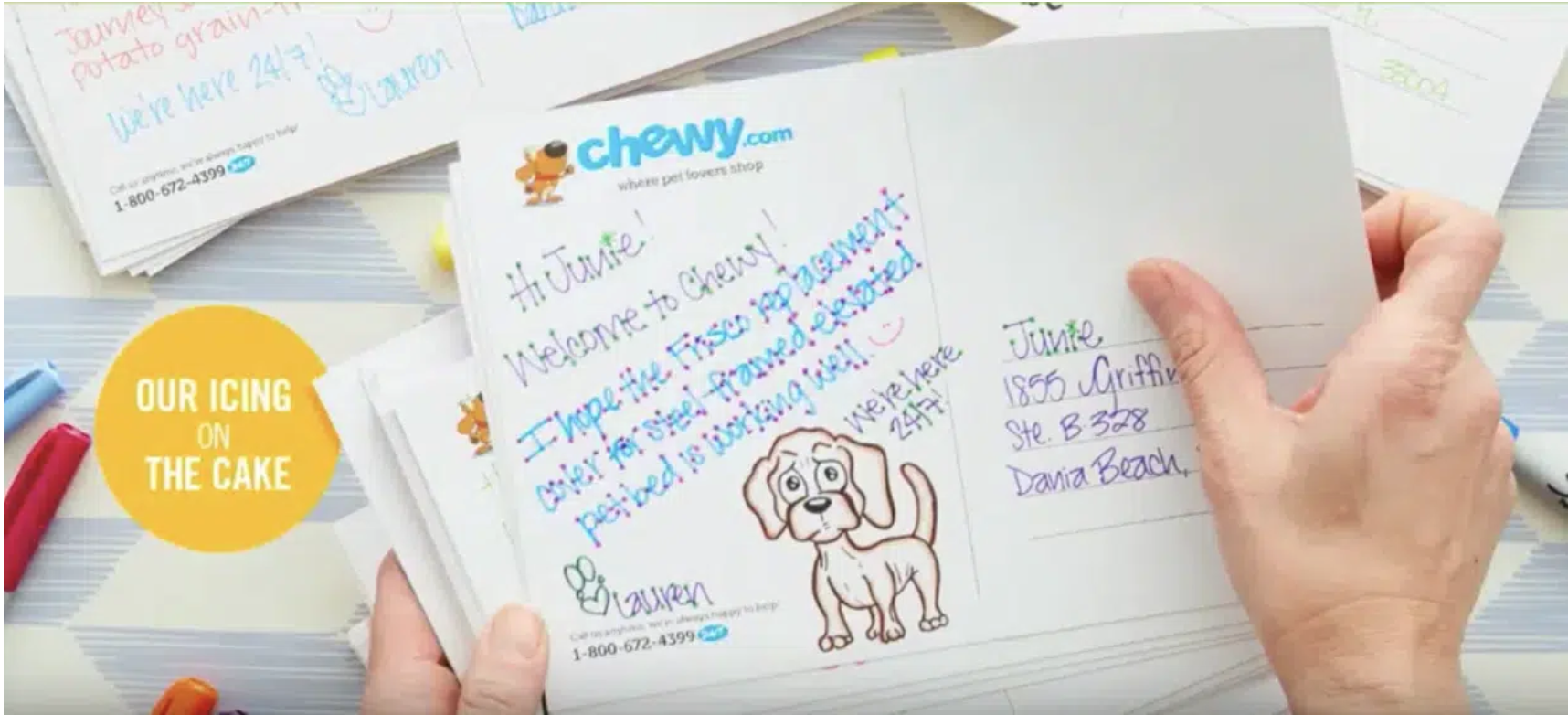
Chewy has mastered genuine relevance. Employees regularly write handwritten notes to both new and loyal customers. When a pet passes away, owners often receive letters of condolence and flowers and are refunded their most recent food purchase. Automated outreach and product reminders are scheduled based on their historical purchase habits rather than generic promotion schedules. Some of these approaches are manual; others are automated. All are relevant.
I recently received an email from a podcast search optimization company which included a custom report showing how Grow Good ranked among other podcasts for different keywords. I knew this report was automated, but it didn’t matter because it was data I valued. When we stop chasing artificial personalization and instead focus on relevance, we create value that builds trust with current and future customers.

Last week, I received an email from someone pitching a guest for my podcast Grow Good. The email mentioned my podcast’s name, a recent guest’s name and quote from their episode, and a thematic connection explaining why the recommended guest was a fit.